
Rooting out your HMDA compliance gaps and preparing you for a successful exam.
We perform exhaustive reviews to confirm that your HMDA data are complete and accurate and conform to examiners’ expectations.
Gathering the accurate and complete HMDA data regulators require can haunt banks come exam time.
You worry about human and systematic errors, gaps in your lending areas, including your commercial lending practices, and whether you've interpreted HMDA requirements correctly.
In many ways, it takes a village to ensure that you're meeting regulators' expectations and that staff across your business lines collect, record, and present all HMDA-required data consistently, effectively, and accurately.
TCA can be part of your village. Our team members, all former bankers, know where banks get tripped up by HMDA.
As such, banks have relied on us for HMDA reviews for decades. We reduce the stress associated with anticipating and preparing for HMDA exams and we give you the confidence that you’ll be ready when an examiner steps through the door.
Through our discovery, we shed light on whether your policies or approaches are missing key regulatory requirements. In addition, our consultants study the latest regulatory changes and understand what they mean to your bank.
Some of the services you can expect:
- A review of your LAR to assess whether your data collection and reporting are accurate and adhere to HMDA requirements
- A deeper dive through custom samples to identify HMDA trouble spots
- Advice on HMDA data validations to ensure you have trust in the integrity of your data
- An analysis of procedures and workflow
We also look for common mistakes we've encountered:
- Inaccurate loan amounts.
- Geocoding and Census Tract changes that aren't reflected in the files.
- Lending transaction bank fees that are missing from the file.
- Missing documentation related to income and credit decision dates.
TCA shows you A Better Way to overcome your HMDA compliance struggles.
Key deliverables include:
- Outlining how to develop an ongoing monitoring strategy to avoid compliance gaps
- Updating your team on the newest HMDA reporting requirements
- Identifying staff training deficiencies
- Advising on HMDA policies and procedures and measures to enhance data collection
Additional Compliance Topics

Let’s Make This Simple – Immigration Status Alignment with ATR, ECOA and BSA
The question – How does a financial institution maneuver through the regulatory requirements to ensure lending compliance when dealing with immigration? TCA – A Better Way!

Compliance – Who Cares?
Today’s compliance landscape is vastly different than what we’ve seen in the past. With revocations of Guidance Documents, increases in enforcement action terminations, decreases in new enforcement actions, rollbacks in regulation, and the flurry of Executive Orders related to compliance coming out of the Oval Office, the view of compliance has been “trimmed”. It certainly […]
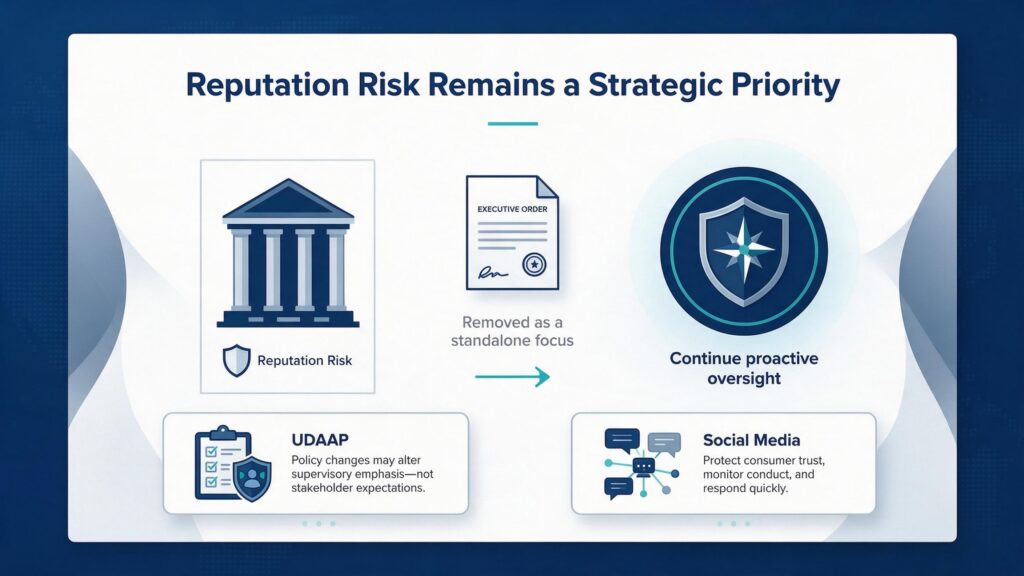
Your Reputation Matters
On June 2, 2026, the FRB, FDIC, and OCC jointly reissued 15 interagency supervisory guidance documents to remove all references to “reputation risk”. TCA – A Better Way!

Government Shutdown: What Can You Do to Help?
Today’s complex world just got a whole lot more complex with the ongoing government shutdown. All of us, no matter where we are located, know someone who is experiencing a loss of income due to the impact of the government shutdown. We know someone who serves in the military or works in air traffic control […]

Back to School: Ready for Regulators’ Pop Quizzes?
With the summer winding down, the kids will be heading back to school and facing tests and the dreaded pop quizzes. But they are not the only ones. Compliance pros also must be ready for regulators’ tough questions. If your regulator were to give you a pop quiz, would you be ready? See if you […]

HMDA and HPML Thresholds Bumped Up for 2024
On December 18, 2023, the Consumer Financial Protection Bureau (CFPB) amended the Home Mortgage Disclosure Act (Regulation C) and the Truth in Lending Act (Regulation Z), adjusting the asset-size exemption thresholds for banks, savings associations, and credit unions. Like the CRA thresholds, the adjustments are pegged to the annual percentage increase in the Consumer Price […]